
Dress brand & style identifier
What Dress Is This?
Upload a dress or label photo, or describe its construction. Compare possible brands using the bodice, waistline, closure, and lining, then check the detail that separates similar styles.
Your possible dress brands will appear here.
Start with the whole silhouette or a readable label. A likely brand does not establish the exact style, collection, or original hem length.
Match the tool to your item
Use this page for a one-piece dress. For a separate garment, isolated logo, bag, or shoe, choose the corresponding tool.
What brand is this dress? Compare its construction map
A floral print or sleeve trend can appear across many labels. Seams and openings give you a more specific set of features to test.
Bodice shaping
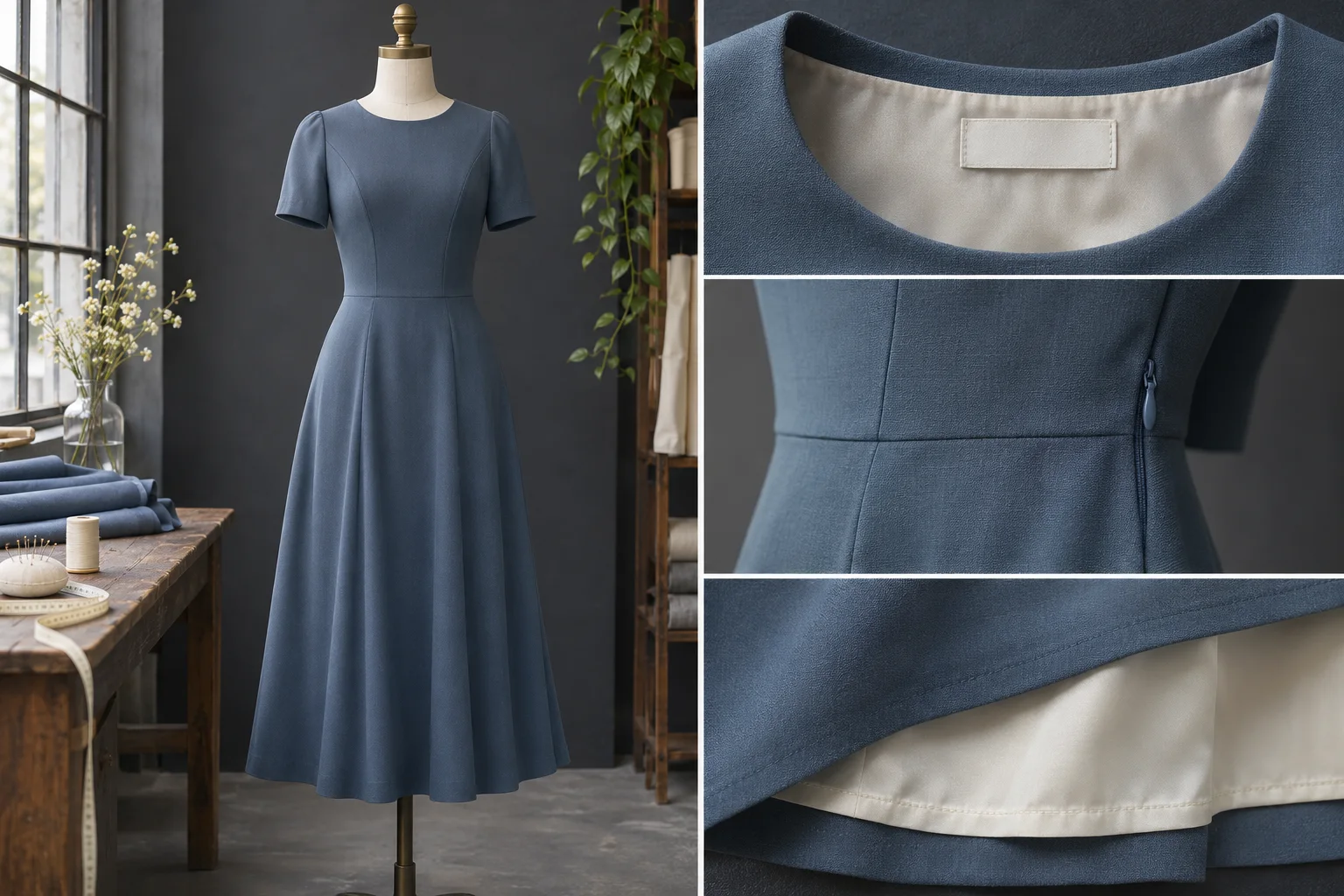
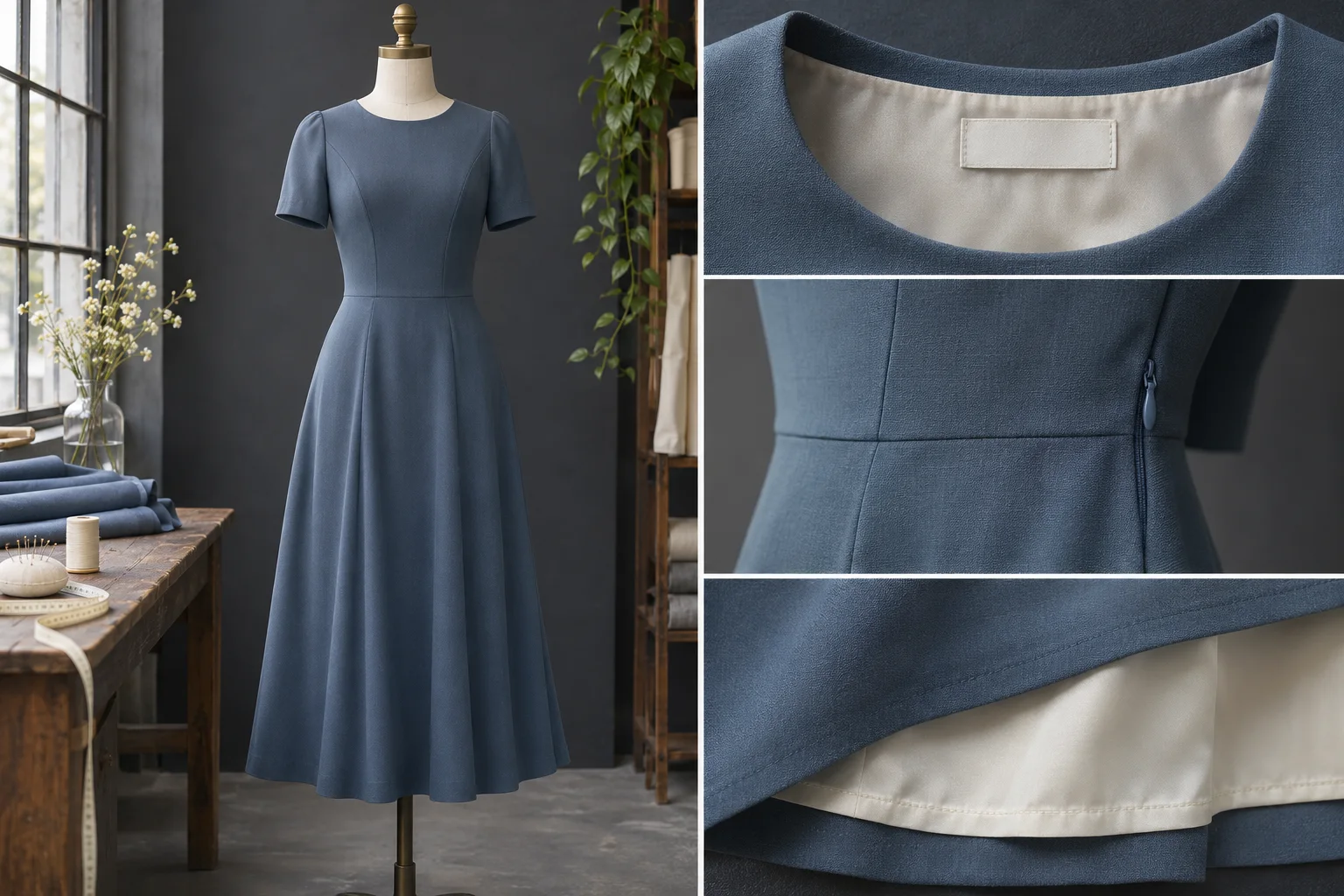
Look for short darts, long curved princess seams, gathered panels, or elastic shirring. Note where each seam begins and ends. A dress with a similar neckline but different shaping is a weaker exact-style match.
Front and back neckline
Record both sides when possible: a square front may pair with a high back, scoop back, keyhole, or adjustable ties. A front-only product photo can conceal the difference that separates candidates.
Waist seam and skirt panels
Find the seam joining bodice and skirt, if present. Is it raised, at the natural waist, dropped, curved, or absent? Distinguish a gathered skirt from one shaped by separate panels; do not mistake a belt for a waist seam.
Closure and opening
Note a side or center-back zipper, functional buttons, ties, hooks, or a pull-on opening. A true wrap opens through an overlap; a faux-wrap may have a stitched overlap and a separate closure. Check what actually opens.
Labels and their location
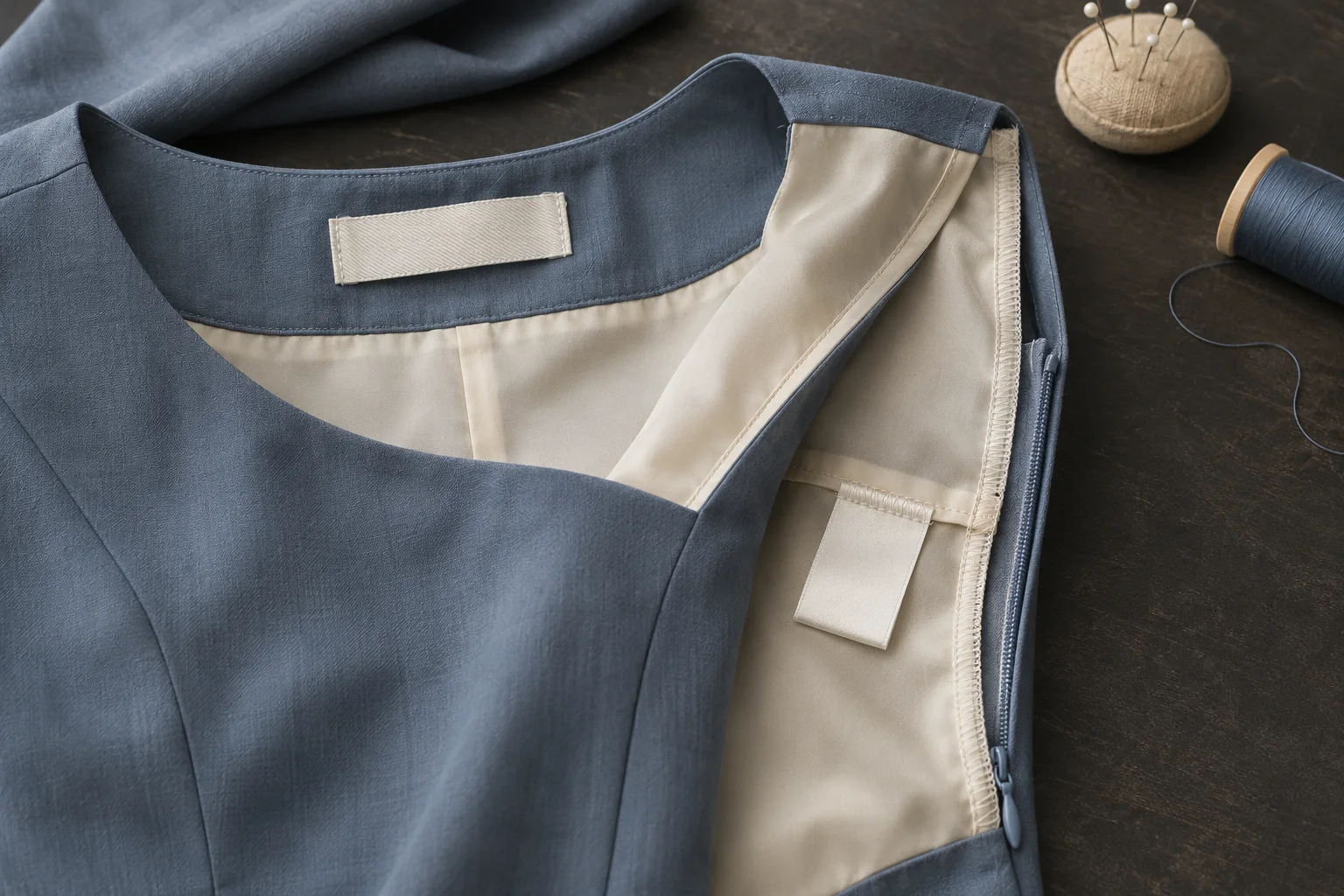
Read neck, side-seam, and care labels separately. Record brand wording, style codes, size and composition as distinct fields. A retailer or importer name on a care label may differ from the consumer-facing brand.
Lining and hem finish
Is the bodice lined, the skirt lined, or only part of the dress lined? Check whether the lining hangs freely or joins the hem. A shortened hem or replaced zipper can differ from an original product reference.
Separate the brand from the exact dress style
Think in three layers: the maker, the design, and this particular garment. A matching brand label can guide the search, while construction identifies the style and alterations explain some differences between your dress and a reference.
Start with a useful view
Upload a full front or three-quarter photo, or a readable label with the silhouette described in notes. Include the back neckline and closure in a follow-up if those details distinguish the candidates.
Trace the seam path
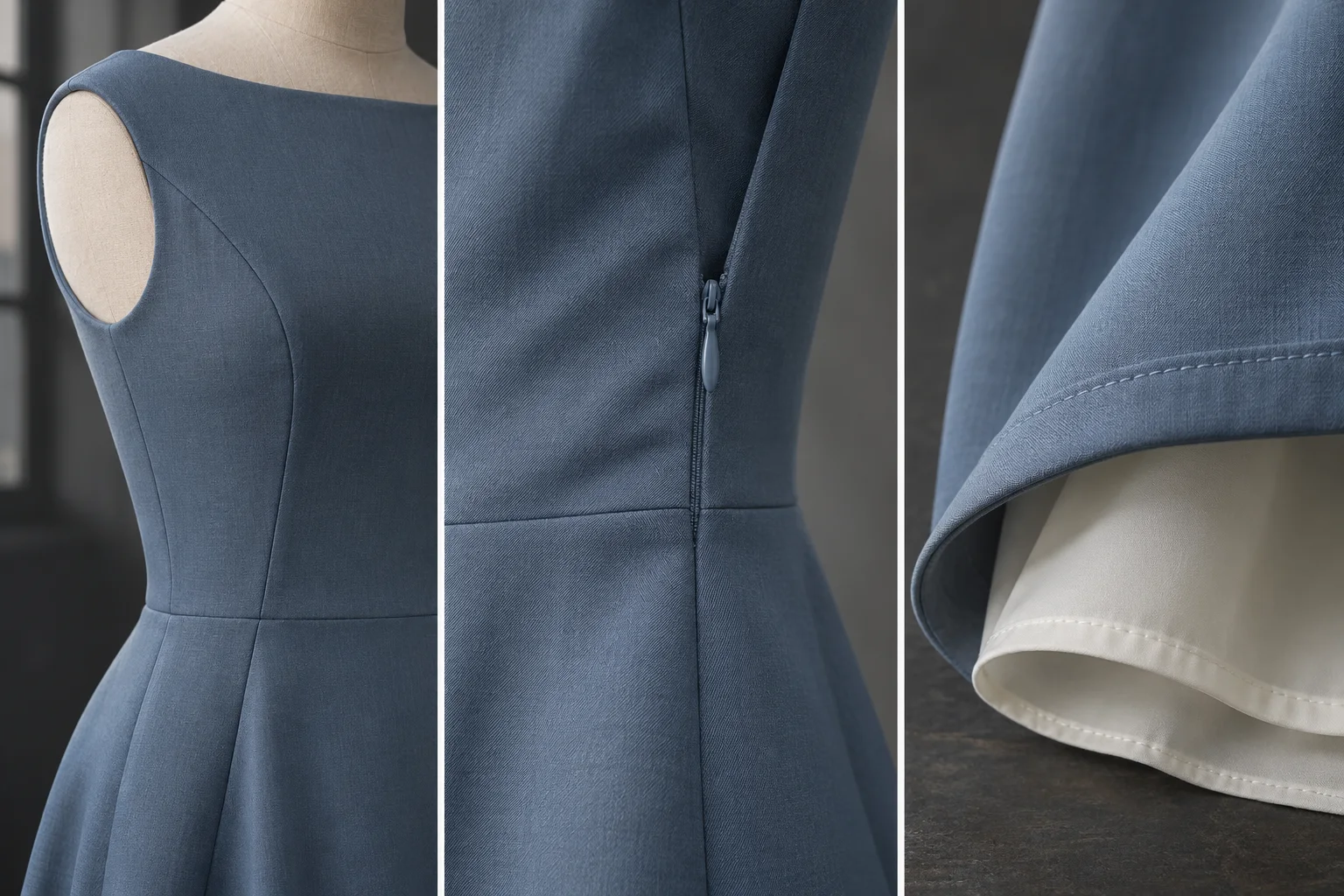
Compare where the bodice seams meet the waist and how the skirt attaches. Curved seams, gathering, and neckline shape together are more informative than a shared print. Avoid assuming a fabric or cut from drape alone.
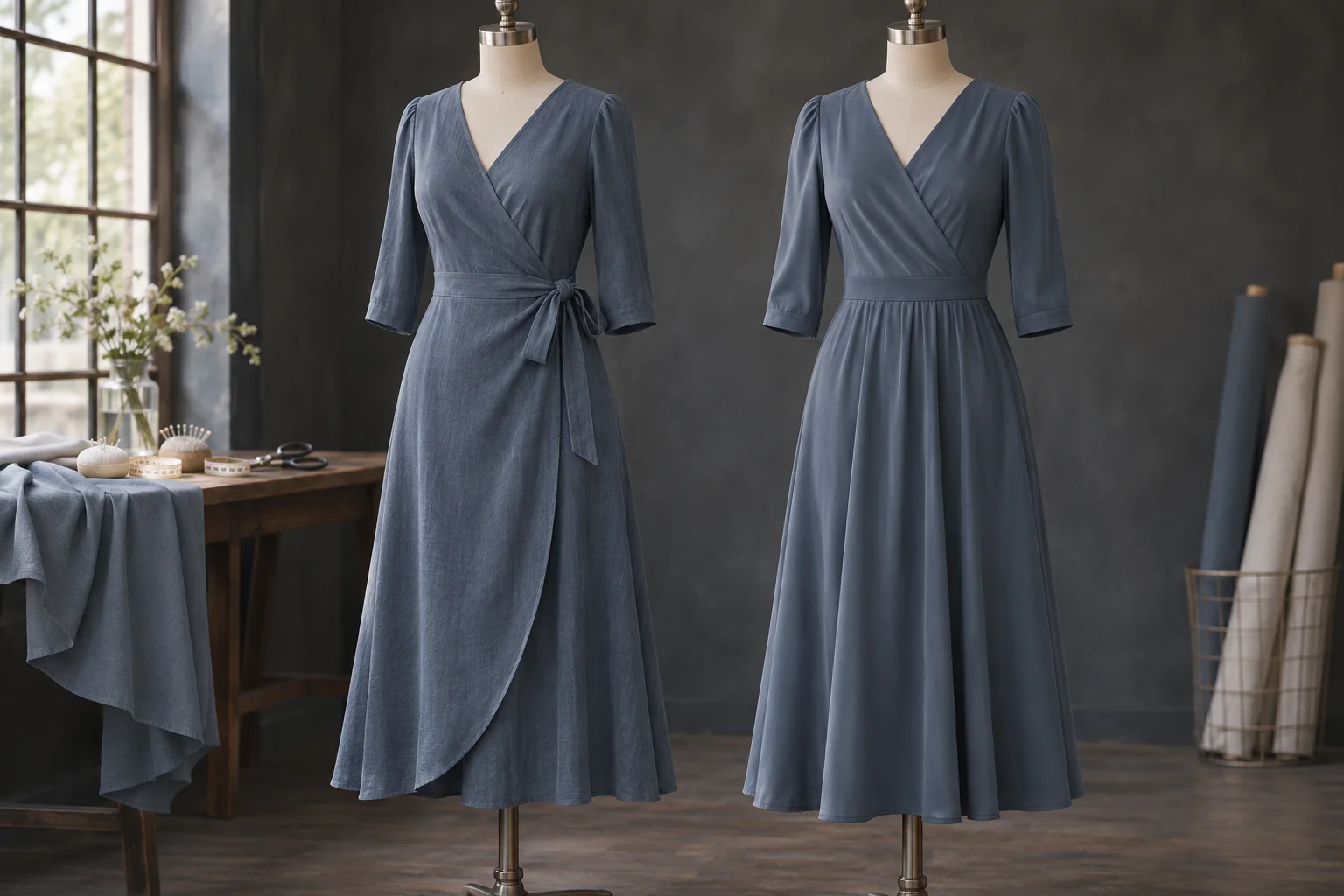
Test the apparent wrap
Look for an opening overlap, inner ties, or a fixed waist seam. A true-wrap and faux-wrap dress may look similar on a hanger but require different product references. A tie alone does not establish the construction.
Check the individual garment
Photograph the label, inside waist seam, and hem if a possible match differs. Ask about alterations. Describe an irregularity without assuming that every conflict comes from repair; the proposed style may simply be wrong.
Dress descriptions that lead to a useful next check
These fictional observations illustrate a research method, not verified identifications or customer results.
A floral dress from a screenshot
Small floral print, puff sleeves, square neckline, fitted waist, midi skirt. The front is visible, but the back and closure are cropped out.
"Compare bodice seam placement first. Ask for the back neckline or zipper location before assigning an exact style. The same print direction or sleeve shape is not enough to establish the maker."
A secondhand wrap-style dress
Navy V-neck dress with a diagonal bodice overlap, side tie, straight waist seam, and a zipper at the center back.
"The fixed waist seam and back zipper are reasons to check for faux-wrap construction. Look for an opening through the skirt overlap rather than assuming the side tie closes the whole dress."
A satin-looking slip dress
Dark green narrow-strap dress with a softly draped neckline, long skirt, small side slit, and no visible label in the listing.
"Describe the visible sheen rather than calling the fabric silk. Check strap adjusters, back shape, seam placement, and care-label composition. A fluid drape alone does not prove bias cutting or a designer brand."
A vintage find with a short hem
Cream sleeveless dress with curved bodice seams, lined skirt, back zipper, worn woven neck tag, and two visible stitch lines near the hem.
"Capture the remaining letters and inside hem. A second stitch line may suggest alteration, but it does not establish the original length or decade. Compare the upper construction before rejecting a longer reference."
Avoid the shortcuts that turn a lookalike into the wrong answer
Choose a follow-up that could rule a candidate out, then keep unsupported details unresolved.
Print match is only a lead
Record motif scale and placement relative to seams, pockets, and gathers. A similar floral design can occur on different cuts; an exact-looking print does not independently establish the brand or licensing history.
A care label can name another company
Separate a visible brand, retailer, importer, and any registration or style code. Use the label to form a research lead, then compare the garment. Do not assume a single company name answers every role.
Do not infer fiber from shine
Satin describes a weave, not a single fiber. A shiny surface may have different compositions. Transcribe a readable composition label; otherwise use visual words such as glossy, matte, sheer, or textured.
Allow for alterations, with evidence
A shortened skirt, added modesty panel, replaced straps, or new zipper can change the outline. Look for stitch remnants or a seller explanation. An alteration hypothesis should explain a specific mismatch, not rescue every candidate.
Separate a dress from a coordinated set
A tucked top and matching skirt can look like one garment in a photo. Look for a connecting waist seam or ask whether the pieces separate before searching one-piece dress references.
Keep maker, style, and authenticity separate
A likely brand does not verify the exact collection, season, fabric, or authenticity of this garment. Use documented product references for style research and a qualified specialist when authentication is needed.
Dress identifier FAQ
Practical answers for missing tags, screenshots, similar cuts, and altered dresses.
Still have questions?
Upload a dress or label photo, or describe the neckline, bodice shaping, waist seam, skirt, and closure. Compare possible brands first. To identify an exact style, check a documented reference against the back, lining, and other details the first image may hide.
Sometimes. A distinctive combination of bodice seams, neckline, back, skirt panels, and closure can narrow the search. A plain slip dress or common floral silhouette may not contain enough evidence for a reliable brand name.
This tool concentrates on dresses: bodice shaping, front and back necklines, waist position, skirt construction, lining, and alterations. Use the clothing identifier for other garments or a general apparel-label search.
A clear frame can provide a starting point. Include the garment outline and describe any visible back or side details. Captions and styling credits are research leads, not proof. A cropped, filtered frame may support only a broad shortlist.
No. Compare the print together with the cut, seam placement, closure, and label. Similar motifs can appear across different garments, and a single photo may not show the print at a comparable scale.
It can suggest candidates when useful evidence is visible. Include the bodice structure, back closure, lining, label text, and any known alteration history. Do not infer an exact designer, year, or original hem length from a familiar bridal or vintage silhouette.
Inspect the neck label and care labels inside the side seam. Not every dress has a useful style code, and size or company-registration fields can appear nearby. Copy the full text and its location before interpreting a number in the context of a possible brand.
A photo can show sheen or drape but may not establish fiber composition or cutting direction. Read the composition label for stated fibers. If grain direction or inside construction is not visible, keep the cutting method uncertain.
Submit one JPG, PNG, or WebP up to 20 MB. Larger photos are optimized before model analysis. Start with an uncropped garment view or readable label; use notes for details from other views, then submit a targeted follow-up image if needed.
Describe any known shortening, replaced closure, changed straps, or added panels. Use remaining inside labels and fixed seam layout. Handmade or unbranded dresses may have no identifiable commercial maker; an uncertain result is more useful than an invented brand.